
Inside Fremont County Assessment and Tax Files
No single screen holds a complete Fremont County tax file. Instead, assessment and collection records sit in separate systems. The Assessor maintains ownership, assessed value, mapping, exemptions, and address data. The Treasurer/Tax Collector handles the bills and payments. Delinquency and tax-deed proceedings also sit with that office.
| Field | What It Shows | Where |
|---|---|---|
| Market value | Assessor's estimate as of the January 1 valuation date | Assessment notice / Assessor |
| Taxable value | Value remaining after qualifying exemptions | Assessment record |
| Exemptions | Approved reductions, including the Idaho homeowner's exemption | Assessor |
| Tax bill and status | Amount billed, payments, balance, or delinquency | Treasurer |
| Taxing districts | The jurisdictions whose levies contribute to the bill | Tax statement |
Neither the tax bill nor the assessed value is what the property sold for. Idaho does require market-value assessment. Still, the final bill folds in exemptions, levy rates, and the parcel's taxing districts. A bill can climb for reasons beyond the market. It may rise because value, levy, exemption, or district mix changed.
Fremont County's Assessment-to-Bill Calendar
The calendar explains why related numbers carry different dates. Assessment date is January 1, drawn from the prior year's market evidence. Notices go out in early June. Owners then have until the fourth Monday in June to protest market value. That protest goes to the county Board of Equalization. After levies are set, the Treasurer mails tax bills in November.
- January 1: valuation date for the assessment year.
- Early June: assessment notice arrives and informal review begins.
- Fourth Monday in June: county value-protest deadline.
- November: the Treasurer mails the property tax bill.
Sales from the current year usually feed the next assessment cycle. That lag matters when an owner offers a fresh closing as evidence of value.
Note: Confirm current deadlines and courthouse access notices before visiting because operational details can change.
Five-Year Appraisals and Annual Market Adjustments
Fremont County appraises property physically on a five-year cycle. In the years between, it adjusts values with comparable market evidence. There is no single published countywide revaluation year covering every parcel. So the right question matters. Which cycle year and neighborhood adjustment apply to the property you care about? The Assessor page shows its ownership and five-year-cycle guidance.
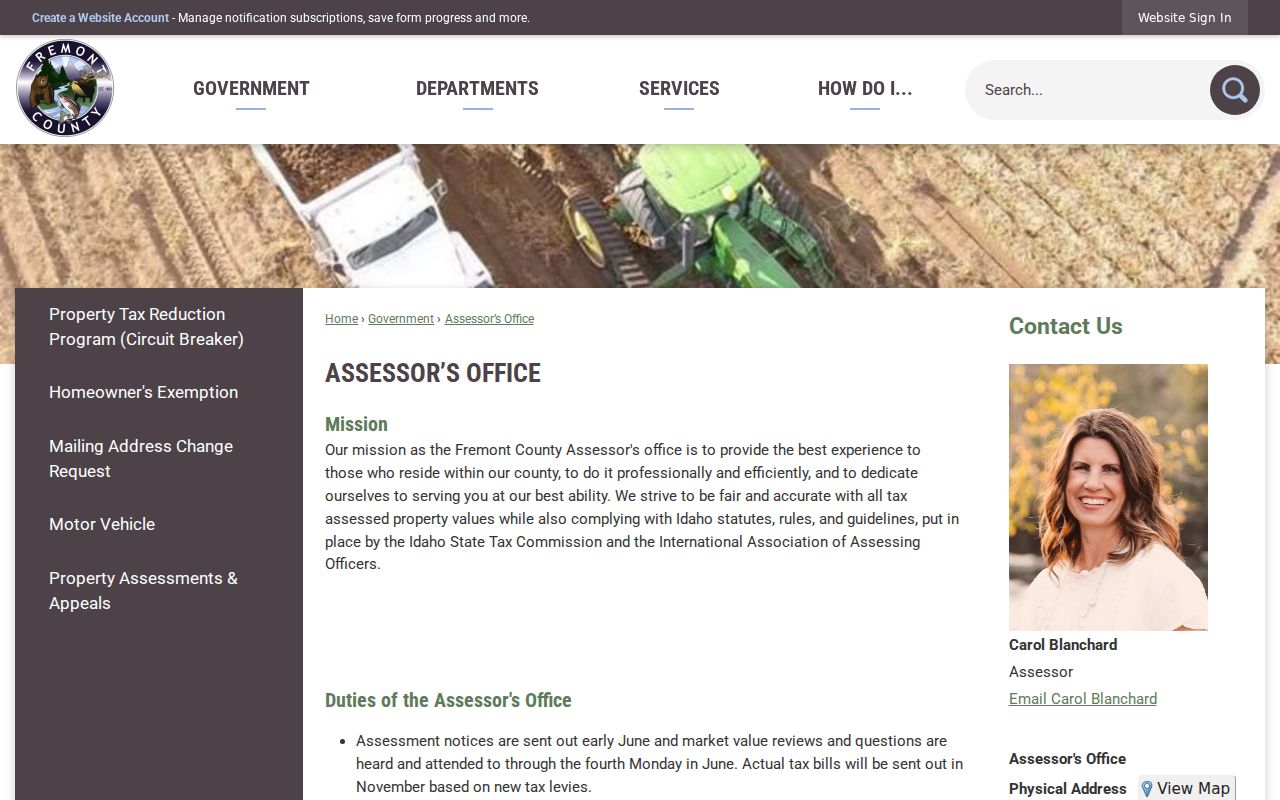
The Assessor page lets you distinguish a published appraisal method from a guess about when one parcel was last inspected.
Look Up a Fremont County Tax Bill
Start with the parcel number from the county MapServer. The Treasurer's online payment item collects identifying and payment details, but it does not serve as a public account-history lookup. For payoff amounts, delinquency, liens, or prior years, contact the Treasurer and request the account directly.
- Use the MapServer search to identify the exact parcel number.
- Match that number to the assessment notice and the Treasurer's statement.
- Check whether the expected exemption appears on the assessment record.
- Ask the Treasurer to confirm payment status, delinquency, lien, or tax-deed action when those facts matter.
- Market value
- The Assessor's estimate of a typical sale price as of the valuation date.
- Levy
- The rate produced by taxing-district budgets and the taxable value within those districts.
- Homeowner's exemption
- An Idaho reduction for an eligible primary residence and up to one acre, administered by the Assessor.
- Tax lien
- The county's claim arising from unpaid property tax; confirm its status with the Treasurer.
The online property-tax payment form asks for a parcel number, the name on the account, and a phone number. Business names and notes are optional fields.
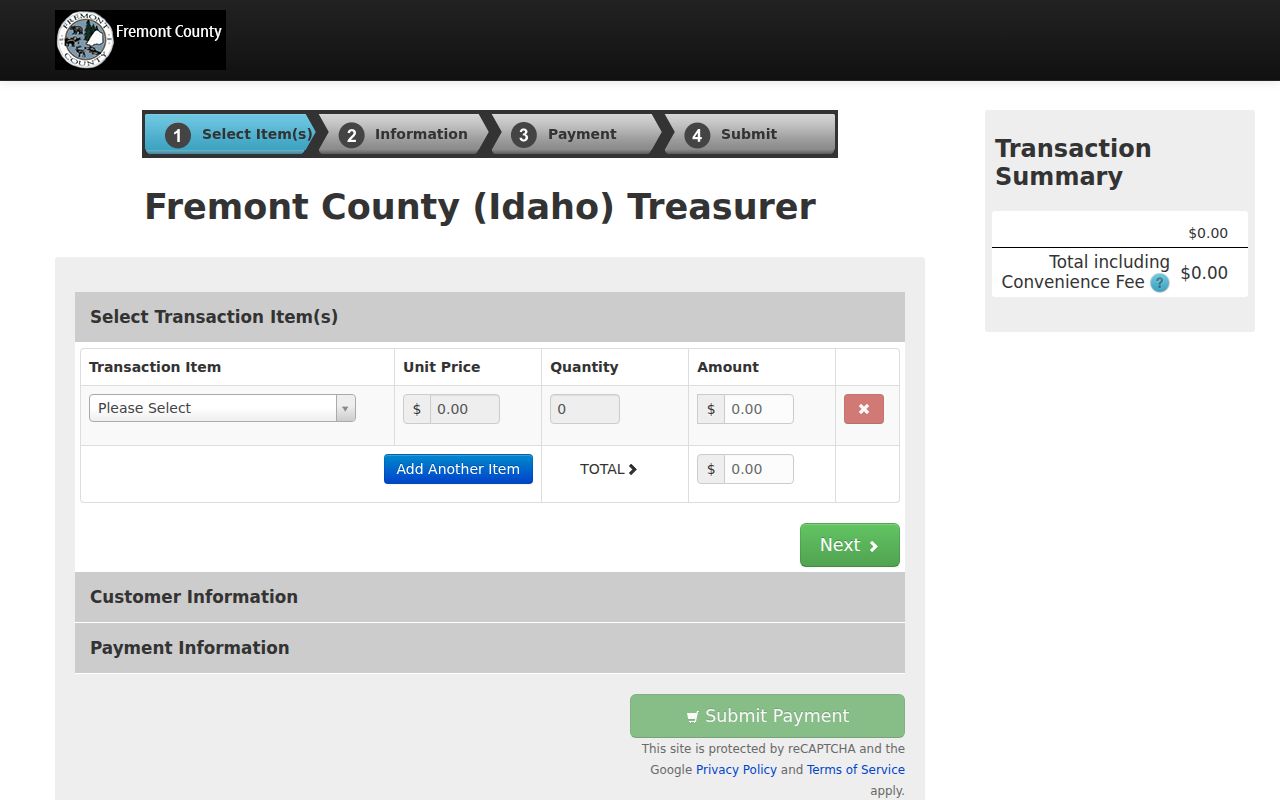
The payer types in the amount. Get the correct balance from the statement or the Treasurer before submitting funds.
Fremont County Payment Channels and Processing Rules
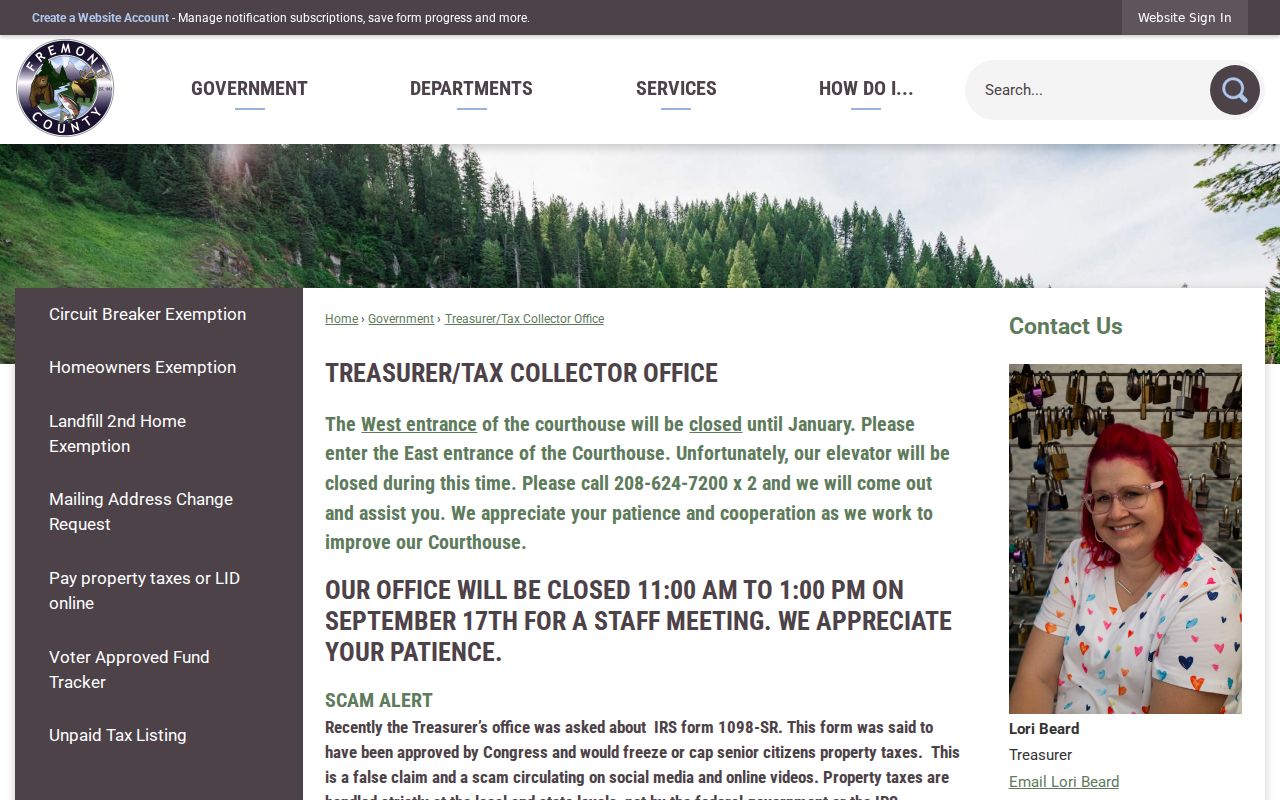
Paying your tax bill in Fremont County can happen three ways. The Treasurer takes online payments, mailed payments, and counter service. Cards run through a processor at 2.5%, while an e-check costs a flat $1. Prefer paper? Cash, checks, money orders, and cashier's checks all work at the office.
Watch for a few traps. A returned check or e-check draws a $20 charge under Resolution 2002-09. If you mail a payment, it must satisfy the Idaho Code §63-217 postmark rule to count as on time.
| Channel | What to prepare | Important check |
|---|---|---|
| Online | Parcel number, contact information, confirmed amount | Processor fee |
| Statement stub and accepted instrument | USPS postmark timing | |
| Counter | Parcel or statement and accepted payment | Entrance and office access notice |
| Phone/request | Parcel number and tax year | Ask for official balance or status |
The Treasurer's published rules show these payment methods and processing charges.
Note: Keep a dated receipt and cite the parcel and tax year whenever a payment question comes up.
Exemptions Change Taxable Value, Not the Levy
The Idaho homeowner's exemption covers 50% of an eligible home plus up to one acre. It is capped at the state's statutory maximum, recently published as $125,000. Application and account questions go to the Fremont County Assessor. Eligibility continues until ownership or primary-residence qualification changes. A missing exemption is not the same dispute as an excessive market value. Ask the Assessor which value and exemption fields sit on the roll. Pick a remedy after that. Only a deeded owner may use the county mailing-address change request. The county verifies the requester against deeded ownership.
Why the Fremont County Tax Mailing Address Matters
The Assessor's mailing address feeds several local records. Fremont County uses it for assessment notices, Treasurer tax bills, public-hearing notices, and some city or Development Services notices. One missed update can ripple across several envelopes. Yet the Assessor and Treasurer remain separate custodians. The Mailing Address Change Request is limited to a deeded owner. The county checks that the requester matches deeded ownership. The form opens with first name, last name, and other deeded owners who should receive mail. Check the current form before assuming which proof or signature fields it requires. An address change does not transfer title or alter the situs address. If the deeded name is wrong, start with the recorded conveyance. Then follow the Assessor's ownership-maintenance process. If a bill simply went missing, ask the Treasurer for a copy and the current balance. Do this while the correction is pending.
Delinquent Tax and Tax-Deed Records
Delinquency can trigger Treasurer notices, publication, auction material, and eventually a tax deed. A 2023 Ashton auction notice carried an abbreviated legal description and parcel number. It also listed the minimum bid and sale location. Payment terms and encumbrance warnings appeared too. That shows the fields such a notice can contain. It does not prove current status for any other parcel.
Tax-deed caution. An auction notice describes one stage of a statutory process; it is not a promise of clear title or a substitute for current Treasurer and Recorder confirmation.
Dated Tax Notices from Fremont County
A tax notice only matters once you know its tax year. Fremont County's Important Property Tax Notice covered the second half of 2025 taxes. It set the deadline for June 22, 2026. A June 22 postmark was required to avoid penalties and interest. The notice also asked taxpayers to sign checks correctly. Online processing charges counted as separate fees. Treat that example as a picture of one year, not a standing due date.
The Treasurer also posts unpaid-tax material and points toward a future tax-deed auction. No stable searchable unpaid-tax list is published there. Publication dates, parcel fields, and redemption status are missing. Ask the office for the current listing. Name the parcel and the tax year you care about. Then confirm whether a later payment or redemption changed the status shown in an earlier notice. A deed or court event can change it as well.
Monthly payments are accepted. The Treasurer does not set up payment plans, though. Get a dated balance for any installment or deadline question. Keep the receipt. A generic payment screen is not proof that all taxes were calculated, paid, or cleared.
Contest a Fremont County Assessment
Start with the Assessor. Fremont County wants comparables from the same geographic area. They should have similar age, property type, and condition. Keep photographs, appraisal evidence, and a written explanation of the property's condition. A protest tests taxable value only. It does not challenge government spending or taxing-district budgets. The county's Property Assessments & Appeals instructions set the deadline along with the evidence guidance the Board expects.
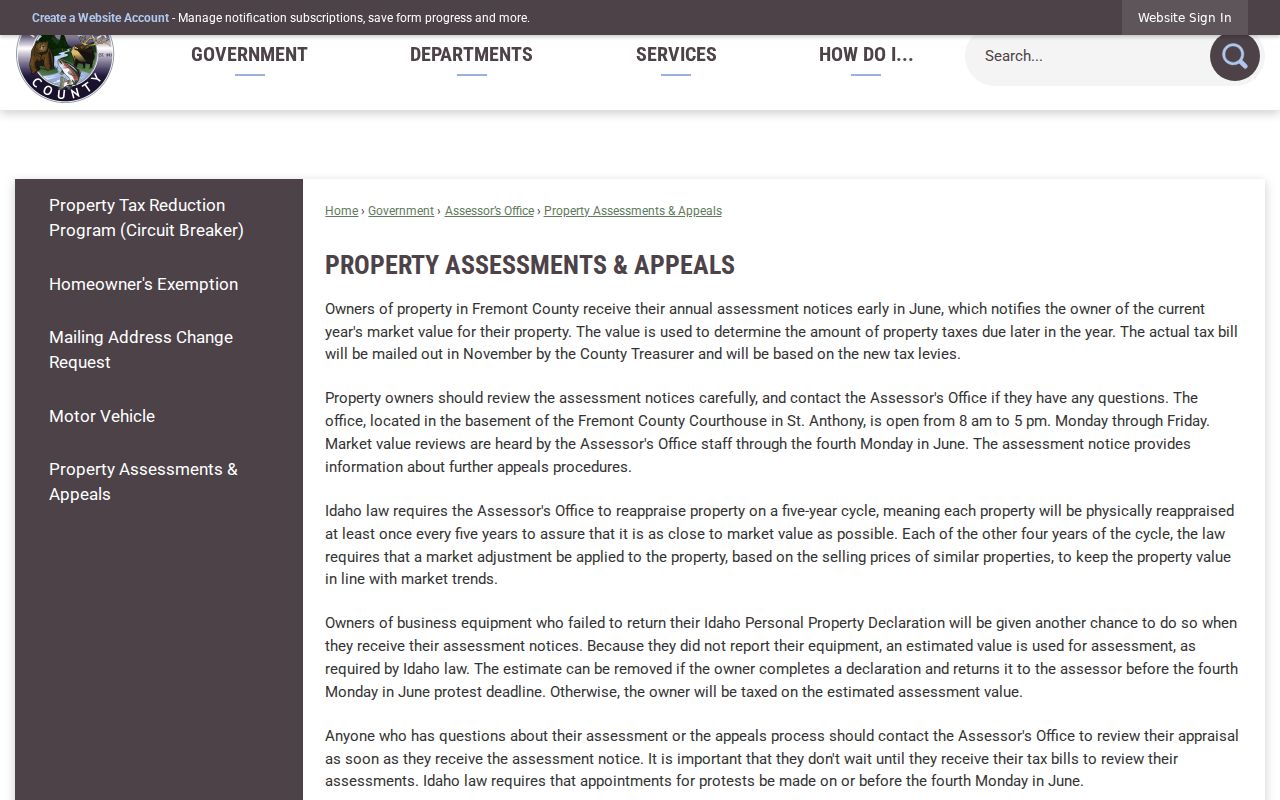
Fremont County's appeal guidance stresses comparable sales and timely filing with the Board of Equalization. Build the packet with care. Label each sale by location, age, property type, and condition, then explain any material difference from your parcel. Keep the mailed notice handy. Photographs and appraisal notes belong there too. A sale during the current calendar year usually bears on the next January 1 valuation, so date every sale rather than presenting an undated price list.
Appeal window. File a value protest with the Fremont County Board of Equalization by the fourth Monday in June; contacting the Assessor alone does not extend that deadline.
Some records never appear online. A parcel-specific request through Fremont County JustFOIA or Idaho Code §74-102 request procedures can reach them. Ask for documents, not new analysis. That means an existing assessment history, tax-account document, notice, or appeal decision.